
Introduction
If you drink or plan to drink CORE Hydration bottled water and you want a reliable, efficient dispenser—whether for your home kitchen, gym space or office break‑room—this article is your full guide. We’ll walk you through choosing the correct “Core water dispenser” (hardware compatible with CORE bottles or equivalent), installing and maintaining it, managing costs, and staying ahead of trends (like smart IoT dispensers). You’ll learn what features matter, what questions to ask, and how to avoid common pitfalls—helping you make a better purchase and keep your hydration system running smoothly.
Let’s dive into the why, what and how of “core water dispenser” solutions.
1. Why Your Dispenser Matters (Especially If You Use CORE Bottled Water)
When you already use CORE Hydration (purified water with added electrolytes and a pH of ~7.4) (bevindustry.com), your dispenser isn’t just a plastic stand: it becomes part of the hydration experience. Here’s why your choice matters:
- Flow & temperature: If the dispenser is slow or doesn’t chill/hot water quickly, it might reduce your likelihood of drinking enough water.
- Hygiene & maintenance: Bottles and spigots can harbour bacteria, plastic residue or biofilm if not cleaned. The right dispenser minimises those risks.
- Compatibility & convenience: CORE bottles come in set sizes; you want a dispenser that fits those easily (without awkward conversions).
- Cost & sustainability: The right system can reduce cost per litre and plastic waste (especially if you move toward bottleless or smarter systems). See market growth data: the US dispenser market is expected to jump from USD 950.5 m in 2023 to USD 1,557.3 m by 2030, with bottled still dominant but bottle‑less growing fast. (Grand View Research)
- User experience and brand alignment: If you’re using a premium water like CORE, you’ll want a dispenser that reflects that standard—clean look, reliable tech, minimal fuss.
Read More: Drinking Water Dispenser Buying Guide 2025
Top-Loading Water Cooler Dispenser – 3-5 Gallon Capacity, Efficient Cooling & Heating, 3 Temperature Settings, Durable Design with Stainless Steel Liner – Ideal for Home, Office, and School Use

Looking for a water cooler that does it all? Whether you need a refreshing cold drink on a hot day or a steaming cup of tea in the morning, this versatile water cooler has you covered. With its quick heating and cooling functions, you can enjoy ice-cold or hot water whenever you want—no waiting required!
Key Features:
- Versatile Cooling & Heating: Delivers ice-cold or hot water swiftly, thanks to its advanced circuit board and stainless steel liner. Perfect for year-round use, this cooler adapts to your needs.
- Generous Capacity: With a 1.1-4.9 gallon capacity, this cooler reduces the hassle of constantly purchasing bottled water, saving you money and trips to the store.
- Energy-Efficient & Eco-Friendly: Uses only 1 kilowatt of electricity per day, saving you money on energy bills while reducing your carbon footprint by eliminating plastic bottle waste.
- Compact & Convenient: At just 10 x 9 x 14 inches, it fits perfectly on desks, bedside tables, or in living rooms—ideal for homes, offices, or even bars.
- Durable & Safe: Built with a pressure-resistant, fall-resistant PP shell and corrosion-resistant stainless steel, ensuring durability and safe water quality for years to come.
- User-Friendly: The one-button switch makes it easy to operate, with both front and rear switches for added convenience.
Feel the difference of refreshing water, available at the touch of a button. Experience eco-friendly, cost-effective hydration every day!
Ready for ultimate convenience? Click to buy now and enjoy hot or cold water in an instant!
2. Types of Dispensers & What to Look For
Choosing a “core water dispenser” really means picking the right type for your context (home vs. office), and making sure it fits your CORE water bottle usage. Here are the main types, with pros/cons and compatibility considerations.
2.1 Bottled Water Dispensers (With 5‑gallon / large jugs)
- These are the classic units: you load a large bottle (often 5‑gallon / ~19 L) on top (top‑loading) or bottom.
- Pros: Easy to install (no plumbing needed), flexible placement, compatible with most large water bottles (including CORE if you use large jugs).
- Cons: You need to purchase bottles/deliveries, heavy lifting if top‑load, storage of bottles, ongoing replacement.
- What to check: Make sure the machine fits your bottle size; check hot/cold/ambient options; ensure sanitation/cleaning instructions; verify stability (to prevent top‑load tipping).
- Example: Many bottled dispenser market reports show this type still holds >70 % share. (Grand View Research)
2.2 Bottleless / Plumbed‑In Dispensers
- These connect to your water line and filter the water as it dispenses—no large bottles to lift.
- Pros: Lower ongoing cost (no large bottle replacements), better for sustainability, streamlined look.
- Cons: Requires plumbing, typically higher upfront cost, may need space for filters/tanks.
- Suitability for CORE water: If you drink CORE bottled water exclusively it might not be obvious to use a bottleless system—unless you transition to filtered tap water—but it could be part of a hybrid strategy.
- Cost‑benefit insight: Some firms estimate bottleless systems can cut water delivery/storage/logistics cost significantly vs bottled. (Aqualume – Bottleless Water Coolers)
2.3 Smart / Touchless Dispensers
- With technology now built‑in (motion sensors, IoT connectivity, water‑quality monitoring, apps) the dispenser is evolving.
- Trends: “Touch‑free water dispensers improve hygiene by avoiding contact with buttons” in shared spaces. (Refreshment)
- Smart market stats: Smart water dispenser market valued at ~USD 1.5 billion in 2024 and projected to reach USD 3.2 billion by 2033. (Verified Market Reports)
- When relevant: In offices, gyms, health‑conscious homes. If you use CORE water (premium bottled brand), a smart dispenser can complement the premium feel.
2.4 Summary Table: Which Type Is Right for You?
| Type | Best For | Key Check‑Points |
|---|---|---|
| Bottled (Top / Bottom) | Home kitchens, small offices | Bottle size compatibility, load ease, cleaning |
| Bottleless | Offices, high‑use settings | Plumbing required, filter cost, ongoing maintenance |
| Smart / Touchless | High hygiene / premium settings | Sensors, app features, water‑quality monitoring |
3. Compatibility with CORE Water Bottles
Since you’re likely using CORE Hydration (or considering it) for your hydration needs, here’s how to make sure your dispenser works seamlessly.
- CORE bottles come in multiple sizes (e.g., 20 oz, 30 oz, and large format jugs) and the brand emphasises a “balanced pH of 7.4” and a 7‑stage purification process. (bevindustry.com)
- If you purchase 5‑gallon jugs of CORE or similar brands, ensure the dispenser is rated for 5‑gallon/19 L bottles.
- If you use smaller bottles (e.g., home consumption) with a countertop dispenser, make sure the spouts and flow rate are appropriate (so you don’t stand there waiting for water).
- Align purchase frequency: If your team uses CORE bottles delivered weekly, make sure the dispenser’s drip tray, bottle‑swap logistics and storage space accommodate your routine.
- Maintenance: The premium bottle brand suggests user expectations of high quality. This means your dispenser should be cleaned/sanitised regularly (e.g., quarterly) to preserve taste, hygiene and brand experience.
Case Study Insight:
Office managers cite cost savings and improved user satisfaction when they pair premium bottled water with a reliable dispenser and a scheduled maintenance plan. For example, one UK firm reported bottled cooler rental & service for just £4.60/week for a basic unit. (thirstywork.com)
While that example is UK‑based, the logic applies: match bottle usage, dispenser logistics, and maintenance cost to usage scale.
Read More: Pureflo Water Dispenser: The Ultimate Solution for Your Hydration Needs
Avalon Bottom Loading Water Cooler Dispenser – Hot & Cold Water, Child Safety Lock, Innovative Slim Design, Holds 3 or 5 Gallon Bottles – UL Listed- White

Experience the perfect blend of convenience, safety, and modern style with our Hot & Cold Water Cooler Dispenser. Whether you’re in the mood for an ice-cold refreshment or a soothing hot drink, this dispenser offers the flexibility you need with crisp cold and piping hot water options. It’s the ideal addition to any kitchen or office space, providing instant access to your preferred beverages.
Key Features:
- Hot & Cold Water Options: Choose between refreshing cold water or a warm, comforting drink with just the flip of a switch.
- Child Safety Lock: Designed with a child safety lock on the hot water spout, ensuring that your little ones stay safe while the entire family enjoys worry-free use.
- Sleek, Innovative Design: Its modern, stylish design seamlessly fits into any home or office decor, adding a touch of elegance to your space.
- Built-in Nightlight & Indicator: Enjoy peace of mind with a nightlight that illuminates the spouts at night and a replace bottle indicator that lights up when it’s time to change the water bottle.
- Bottom Loading: Say goodbye to the hassle of lifting heavy bottles. The bottom loading feature makes refills easier and eliminates spills, working perfectly with 3-5 gallon water bottles.
Why You’ll Love It:
Not only does it provide access to refreshing beverages at the perfect temperature, but it also ensures that your family stays safe. The thoughtful design features, such as the child safety lock and easy bottom loading, make it the ideal choice for busy families or offices.
Ready for ultimate convenience and safety in your daily hydration? Order yours today and make your space more functional and stylish!
4. Cost & Maintenance: What to Expect
Here’s where many users stumble—mistaking upfront cost for total cost of ownership (TCO). Let’s break it down.
4.1 Market size & growth to set context
- The global water dispenser market (including bottled, bottleless) was estimated at USD 2.98 billion in 2023, projected to reach USD 5.35 billion by 2030. (Grand View Research)
- In the U.S., the water dispenser market generated USD 950.5 million in 2023, with a forecast to reach ~USD 1,557.3 million by 2030 (CAGR ~7.3 %). (Grand View Research)
- Smart dispenser segment is growing strongly (CAGR ~8.9% to 2033). (Verified Market Reports)
These numbers show a healthy market—so your installation is part of a larger trend.
4.2 Typical cost breakdown
- Upfront cost: Purchase or rental of dispenser hardware. Bottled‑unit rental (with bottle deliveries) might cost a few £/$/week in the UK example. (thirstywork.com)
- Ongoing cost: Bottle replacement/delivery (for bottled systems), filter replacements/maintenance (for bottleless/smart systems), cleaning/sanitisation visits.
- Hidden cost: Time spent swapping bottles, lifting heavy loads, storage space, disposal of empty bottles.
- Return on investment: Bottleless systems often recover cost within 3‑5 years because of lower per‑litre cost and no delivery fees. (Aqualume – Bottleless Water Coolers)
4.3 Maintenance & hygiene
- Clean spigots, drip trays, and bottle‑interface every 3‑4 months (or more frequently in high‑use environments).
- If the unit offers hot water, child‑safety lock and temperature calibration should be checked.
- For smart/touchless dispensers: ensure sensors are aligned, filters replaced per schedule, and connectivity is functional.
- Incentive: In workplaces spacing heavy bottle deliveries and ensuring a hygienic dispenser supports employee health and productivity (studies show dehydration of even <5% body‑water loss impairs cognition, reaction time). (Midwest Water Associates, LLC)
5. Smart & Emerging Trends You Should Know
The dispenser market is evolving, and if you’re buying a “core water dispenser” now, you may want to future‑proof your setup.
5.1 Touchless / hygiene‑first design
- Dispensers equipped with motion sensors or foot‑pedals reduce surface contact and are especially valuable in shared spaces (offices, gyms, healthcare) where hygiene is critical. (Refreshment)
- Recommendation: If you install in a shared or public area, consider touchless as a standard rather than optional.
5.2 Smart / IoT connectivity
- Features like app‑based monitoring of filter life, usage analytics, water‑quality alerts are increasingly available. (techsciresearch.com)
- For high‑use environments (office with many users, fitness facility) these features help optimise cost, maintenance and hygiene schedules.
5.3 Sustainability & bottleless shift
- Many organisations are aiming to reduce plastic waste and logistics cost. Bottleless systems and heavy‑use smart dispensers support that.
- The bottled segment is still dominant but growth in bottleless and smart is accelerating. (Grand View Research)
- For a user of CORE bottled water, consider whether you’ll stay bottled or eventually shift to filtered tap with a premium unit. That planning can inform your dispenser choice now.
5.4 Data‑driven hydration culture
- Offices that track usage, promote staff hydration and install visible, attractive dispensers often see increased water consumption and improved wellness/performance (research supports benefits of hydration on cognitive & physical performance) (Midwest Water Associates, LLC)
- Consider pairing your dispenser with signage, usage tracking, or a hydration campaign if you’re in a team setting.
6. Buying & Installing Your “Core Water Dispenser” – Step by Step
Here’s a structured checklist to help you choose, install and optimise your dispenser for CORE water usage:
Step 1: Define your usage scenario
- Home kitchen for 1‑4 people? Office break‑room for 10‑50 people? Gym space with heavy turnover?
- Estimate litres per day/week. This informs whether a standard bottled unit is enough or a higher‑capacity smart unit is required.
Step 2: Choose the dispenser type
- If you already use CORE bottled jugs: bottled unit likely easiest.
- If you want low logistics and your tap water is good: consider bottleless.
- If hygiene, branding or tech features matter: choose smart/touchless model.
Step 3: Check compatibility with CORE bottles
- Confirm bottle size fits (5‑gallon/19 L jugs or smaller).
- Confirm dispenser supports ambient, cold and hot if you need multiple temps.
- Confirm maintenance schedule and ease of swapping bottles.
Step 4: Installation logistics
- For bottled units: place near electrical outlet, stable floor, adequate space for bottle swap.
- For bottleless/plumbed units: plumbing connection, water line filter compatibility, installation cost.
- For smart units: check WiFi/ethernet connectivity, app setup, sensor calibration.
Step 5: Maintenance & cost plan
- Set service interval (e.g., clean every 3‑4 months, filter change every 6‑12 months).
- Budget delivery or filter cost. Estimate cost per litre.
- Consider going with rental or purchase. Rentals may include service/maintenance. (Cool Planet Water)
- Example: one source notes bottled water service in UK started around £4.60/week for basic cooler and bottles. (thirstywork.com)
Step 6: User experience & adoption
- Label dispenser with “CORE Hydration compatible” if desired for brand consistency.
- Promote usage: accessible location, visible signage, encourage refills.
- Monitor bottle swap frequency or usage statistics if smart unit.
Step 7: Monitor, iterate & optimise
- After 3‑6 months check: Are bottles being replaced on schedule? Is usage as expected? Are users satisfied with water temperature, flow, taste?
- If you find inefficiencies (heavy lifting, delayed swaps, unhappy users), consider upgrading (e.g., bottom‑loading instead of top‑loading; touchless vs manual).
7. Real‑World Example (Case Study)
Scenario: A mid‑sized marketing agency (30 staff) switches from individual bottled water consumption to a central dispenser system paired with CORE bottled water.
- They choose a bottled, bottom‑loading dispenser (to remove heavy lifting).
- Estimated water usage: ~300 litres/week.
- They install the dispenser near the kitchen, label it with brand “CORE Hydration – Balanced pH 7.4”.
- First 3 months: They track bottle swaps, costing approx USD 300/month for bottles + delivery.
- At the same time: They implement a “Hydration Challenge” signage and encourage employees to refill personal bottles.
- After 6 months: Bottle swap frequency is stable. They survey staff and find a 12 % increase in water consumption (translated by HR into improved afternoon alertness).
- Maintenance schedule: every 4 months cleaning, yearly servicing included in rental.
- Outcome after 12 months: a clearer budget line, reduced single‑serve bottle purchases (less plastic waste), better hydration culture, and higher staff satisfaction with the “premium water + dispenser” setup.
Key takeaway: Pairing a premium bottled water brand (CORE) with the right dispenser and supporting culture yields both practical and softer benefits (hydration, wellness, branding).
Read More: Best Top Loading Water Dispensers (2025): Pros, Cons & Buying Guide
GE Top-Loading Hot and Cold Water Dispenser | 5 Gallon Water Cooler for Home or Office | 2 Temperature Settings | Taller 13″ Dispenser Height | Freestanding with LED Night Light| Charcoal
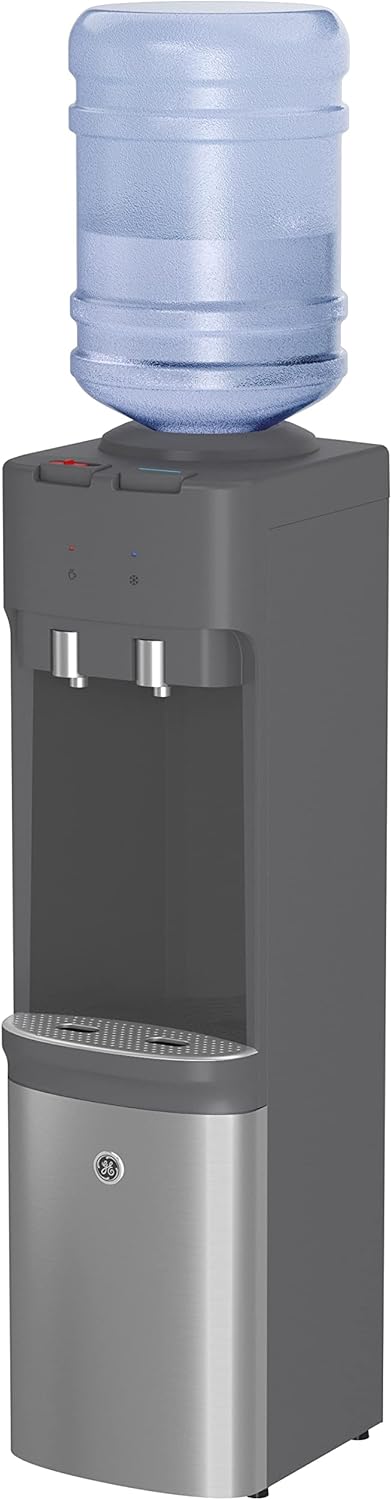
Experience convenience and efficiency with the GE Appliances water dispenser. Designed for modern lifestyles, this water cooler combines functionality with ease of use to make hydration effortless and fast.
Key Features:
- Taller Dispenser Height: Perfect for bottles up to 13″ tall, this dispenser is ideal for large containers, making refills a breeze.
- Top Load Design: Say goodbye to spills with the no-spill top load system. It’s 5-gallon bottle compatible, and installation is simple and quick.
- Hot & Cold Water Options: Whether you need hot water for tea or cold water to quench your thirst, this dispenser has you covered. With a hot water output of up to 5 liters per hour and cold water at 3.5 liters per hour, it’s designed to keep up with your busy day.
- Faster Flow Rate: With a high-flow mechanism, it fills bottles and glasses faster than ever, so you can stay hydrated without the wait.
- LED Night Light: Never fumble in the dark again! The built-in LED night light illuminates the water dispenser tray, making it easy to fill your glass even at night.
Why You’ll Love It:
- Enjoy quicker hydration without the hassle of waiting for water to pour.
- Hot water at the push of a button for soups, beverages, and more.
- A sleek, modern design that looks great in any home or office space.
Make hydration easier and faster. Order yours today and stay refreshed, all day long!
8. Frequently Asked Questions (FAQ)
Q1: Can I use any standard water dispenser with CORE bottled water?
A: Yes, as long as the bottle size and fitting work. But to align with the premium brand experience, it’s best to choose a dispenser with reliable flow, good temperature control and maintenance schedule.
Q2: How often should I clean my dispenser?
A: Every 3‑4 months for general cleaning; more often in high‑traffic areas. Also check for manufacturer recommended sanitisation of spigots, trays and bottle interfaces.
Q3: Are smart dispensers worth the extra cost?
A: If you’re in a shared environment (office, gym) where hygiene, analytics (usage data) and minimal contact matter—and you drink CORE bottled water—then yes. If you’re just installing at home for one or two people, a standard model might suffice.
Q4: Should I rent or buy my dispenser?
A: Depends on usage and budget. Rentals often include service and minimise upfront cost. Buying may yield lower long‑term cost if usage is high and maintenance predictable. Always ask for a 3‑5 year Total Cost of Ownership (TCO). (Aqualume – Bottleless Water Coolers)
Q5: What are the sustainability considerations?
A: Bottle usage generates plastic waste and logistics emissions. If you’re committed to CORE bottled water, then ensure efficient bottle management and recycling. If you’re ready to shift, consider bottleless or hybrid systems.
9. Summary & Key Takeaways
- If you’re using CORE Hydration bottled water, the dispenser you choose becomes a critical part of the experience—flow, hygiene, compatibility, cost matter.
- There are three major dispenser types: bottled (traditional), bottleless (plumbed), and smart/touchless. Choose according to your usage, budget and context.
- Cost & maintenance: Don’t just look at upfront hardware cost. Factor in bottle deliveries, filter changes, cleaning, labour/time cost of swapping bottles.
- Smart & emerging trends matter** for workplaces or premium settings: touchless dispensing, IoT connectivity, usage analytics, sustainability.
- Installation & user adoption: Follow a structured plan—define usage, pick type, confirm compatibility with CORE bottles, install well, maintain regularly, promote usage.
- Future‑proof: Size your system for potential growth; consider if you might move to a bottleless or smart dispenser later; factor in sustainability goals.
- Outcome: With the right dispenser, paired with CORE bottled water and good usage practices, you’ll get improved hydration, better user satisfaction, cleaner operation and potentially cost savings over time.
Call to Action
Ready to get started? First, check your space and usage: How many people will use the dispenser? How many CORE bottles do you go through weekly? Then, pick a shortlist of compatible dispensers (bottled, bottleless, smart) and request a quote or demo. Make sure you ask for service/maintenance terms and ask: “Will this dispenser handle CORE bottle size and my usage demands?”